Audi Sport · Updated 25 August 2026
Audi is still trying to save its five-cylinder
Audi Sport boss Rolf Michl says evaluation and negotiations over a next-generation RS3 are still running, keeping Audi’s 2.5-litre inline-five under active review rather than finally condemned — but with no decision yet and Euro 7 still demanding an expensive engineering response.
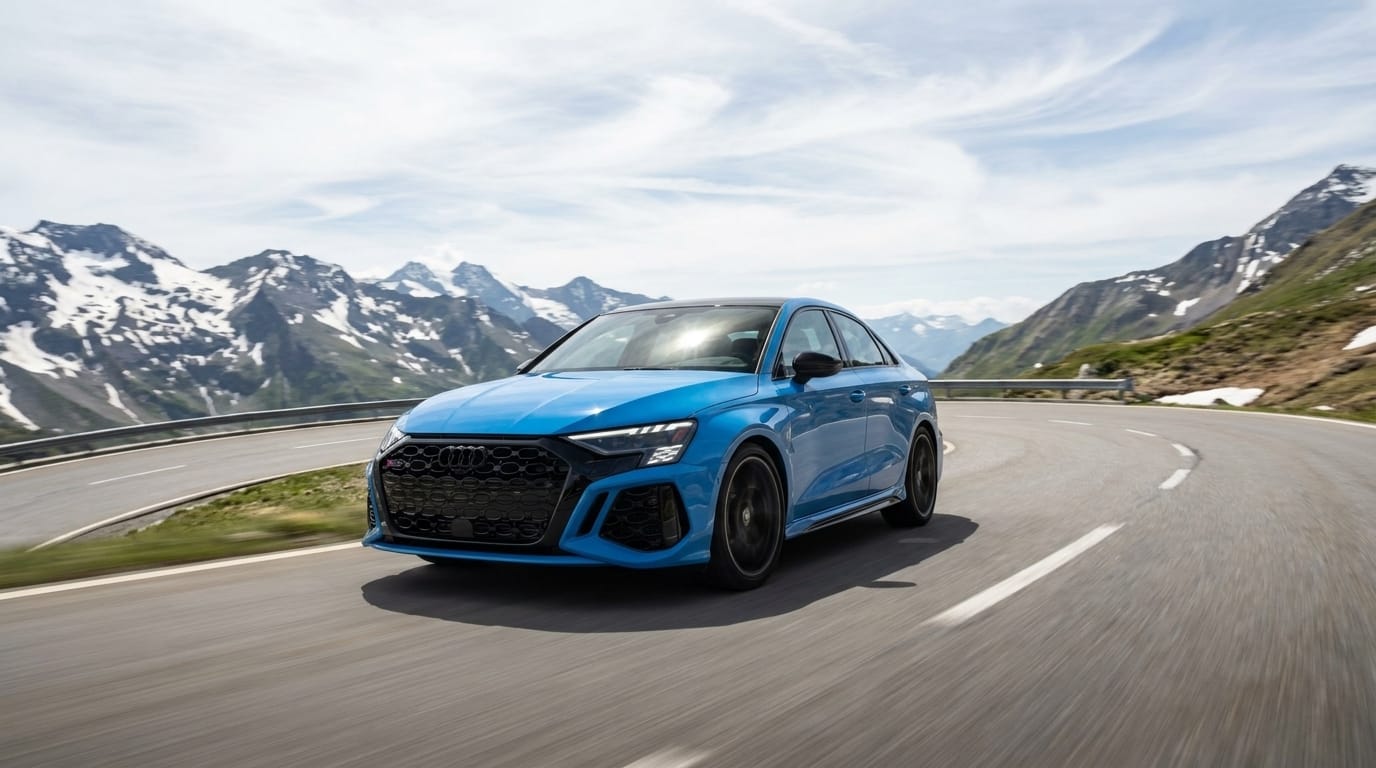
The route from “probably over” to “still under discussion”
Current position
Europe still has an end date on the books
Drive reported on 10 April 2026 that Audi had confirmed European RS3 production was due to end in mid-2027 because the present five-cylinder would not meet the next European emissions rules. The same report said continuation was planned in the United States and some other markets with less stringent rules. The fresh deliberations do not cancel that timetable.
Source: Drive, “2027 Audi RS3 to end production for Europe next year”, 10 April 2026Engineering response
A hybrid is one route; exhaust treatment is the harder detail
Drive reported on 23 April that electrical assistance was being considered. Citing Autocar and inside sources, it said European compliance would require significant changes, including a new particulate filter, more sensitive nitrogen-oxide sensors, recalibrated fuel injectors and upgraded emissions catalysts. Those are reported requirements, not a publicly confirmed Audi production specification.
Source: Drive, “Audi RS3 could be thrown hybrid lifeline”, 23 April 2026“We are open to every possibility. The thoughts [on how to do that] will continue at our end. I can tell you we are still thinking in different technological possibilities.”
Rolf Michl, Audi Sport chief, quoted by Autocar and reported by DriveRegulatory dependency
The obstacle is not simply whether it can be built
In September 2025, Audi chief executive Gernot Döllner told Drive that adapting the engine was “not difficult”; the issue was scale and overall market demand. By April 2026, he described its future as still under discussion and questioned whether Audi could recover the investment needed for Euro 7. In plain English: a technical fix needs a business case, and the low-volume RS3 must carry the cost unless Audi can spread it further.
Sources: Drive, 8 September 2025 and 23 April 2026“I don’t know if we’re able to refinance the investment in EU7 regulations.”
Gernot Döllner, Audi chief executive, quoted by Autocar and reported by DriveStated outlook
The door is open, not the production line
Carscoops reported on 20 August that Michl said evaluations and negotiations over a next-generation RS3 were continuing with Audi AG, but that the company had not reached a decision. This is the crucial distinction: Audi Sport’s desire to retain the engine is now explicit, while approval, funding and a compliant technical package remain unresolved.
Source: Carscoops, “Audi Could Save Its Five-Cylinder The Same Way Lamborghini Saved Its V12”, 20 August 2026“We’re well aware about the historical meaning of the five-cylinder. Evaluations are still running, and people who know me know that I also have a personal relationship to the five-cylinder engine. It’s so characteristic and also deeply rooted in history – so let’s see.”
Rolf Michl, Audi Sport chief, quoted by Autocar and reported by Carscoops
Two numbers that explain the attachment
These describe different things, so this is context rather than a contest: one tells you the engine’s physical size; the other records its period recognition.
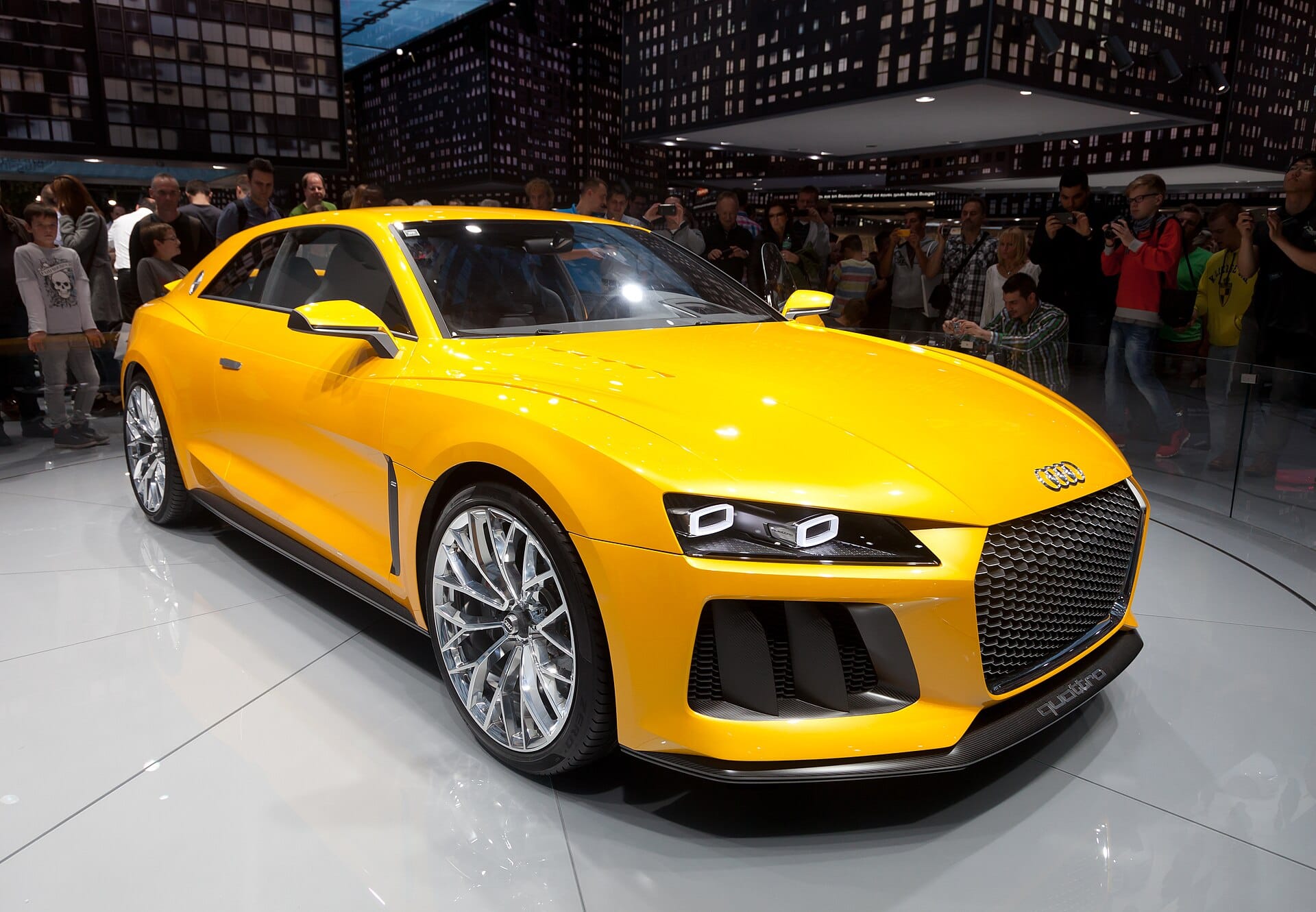
The lineage, then the intervention
So where does that leave the five-cylinder? In a narrower, more interesting place than either “saved” or “dead”. Audi has a known European cutoff, a reported menu of costly technical changes and a performance division arguing for another generation. What it does not yet have is a decision. Until Audi approves the investment and names a compliant production model, survival remains a possibility under evaluation — not a promise.